Agriculture Drone Spraying Pesticides on Crop Fields

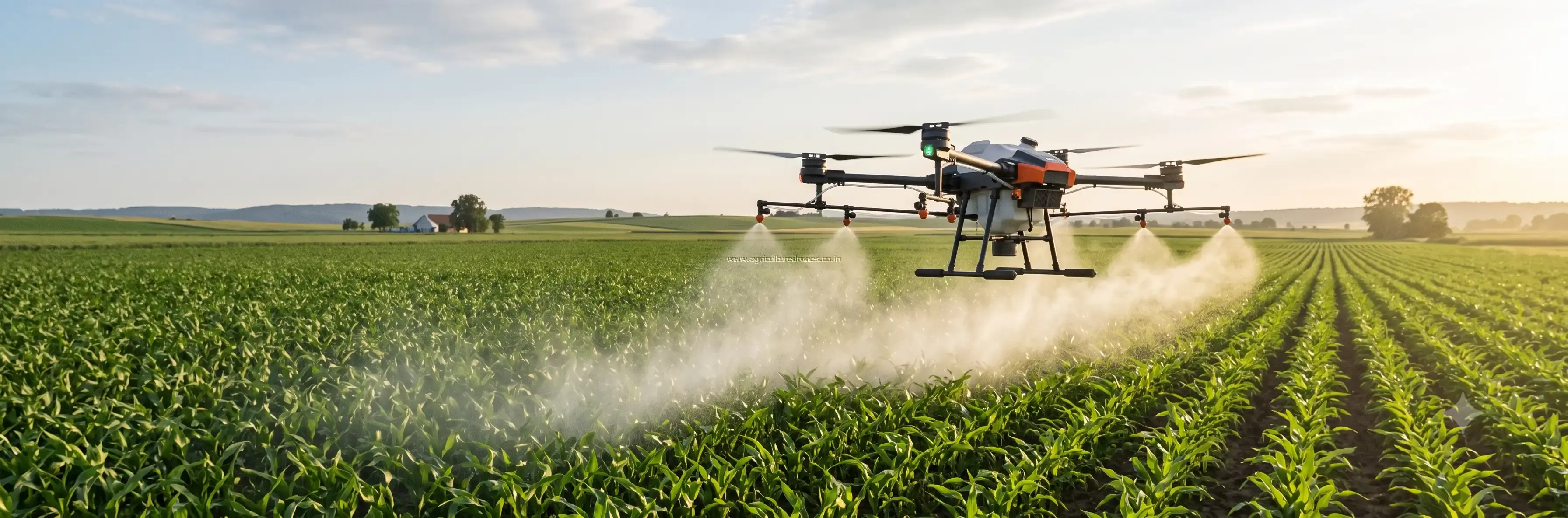
Modern farming technology is rapidly evolving, and one of the most significant breakthroughs in recent years is the use of agricultural drones. Specifically, an agriculture drone spraying pesticides on crop fields is transforming how farmers manage crop health and protect their yields. By combining aviation technology with advanced agricultural science, these unmanned aerial vehicles are making farm spraying faster, safer, and highly efficient.

In the past, pesticide application relied heavily on manual labour or heavy tractor-mounted sprayers, which often resulted in uneven coverage, soil compaction, and increased exposure to chemicals. Today, drone-based pesticide application offers a smarter alternative. By utilizing GPS-enabled navigation and precision farming techniques, drones ensure that chemicals are applied exactly where they are needed, minimizing waste and environmental impact.

Vega Info Tech stands at the forefront of this agricultural revolution. We provide innovative agriculture drone technology and precision farming solutions designed specifically to help farmers improve spraying efficiency. Whether you are managing a small vegetable farm or a vast commercial crop field, our drone spraying solutions support modern agricultural practices, optimize the use of costly farming inputs, and reduce the heavy manual effort traditionally required for crop protection.

What Is an Agriculture Drone for Pesticide Spraying?

An agriculture spraying drone is a specialized, unmanned aerial vehicle designed specifically to carry and disperse liquid agricultural chemicals, such as pesticides, herbicides, and fertilizers. Unlike standard photography drones, a farming drone is built with heavy-duty rotors, large-capacity liquid tanks, and precision pumping systems. It is essentially an advanced, flying farm sprayer tailored for smart farming.

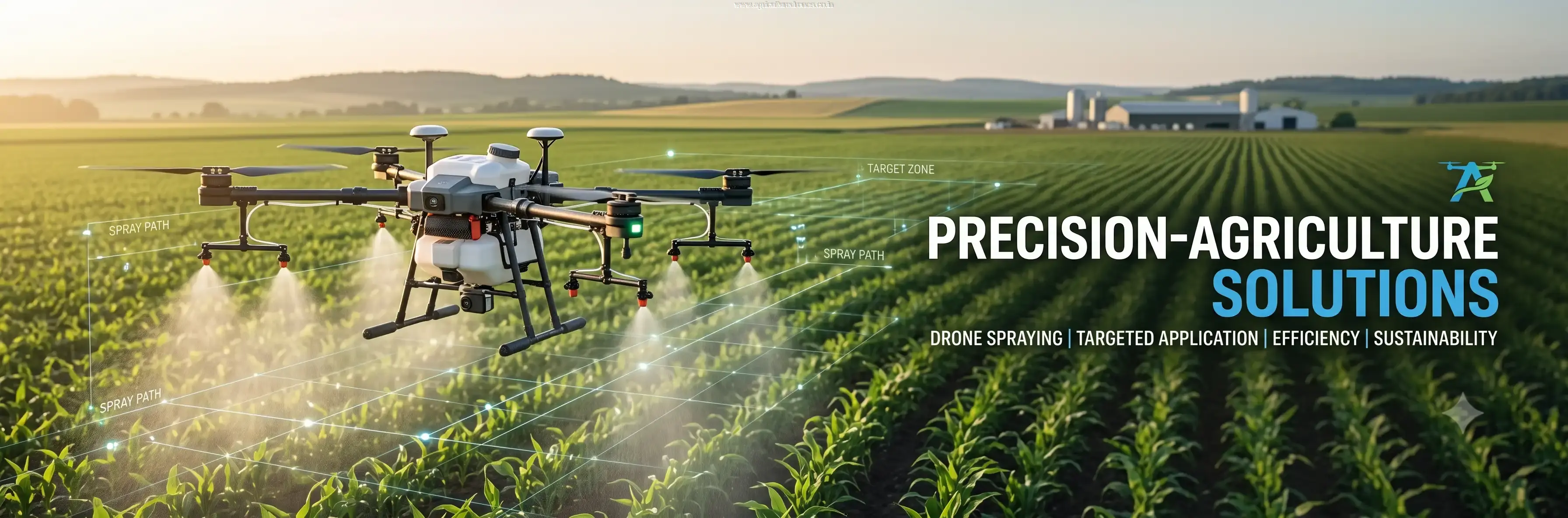
Agriculture Spraying Drones solution in India
Drones Carry Spray Pesticides Solution India

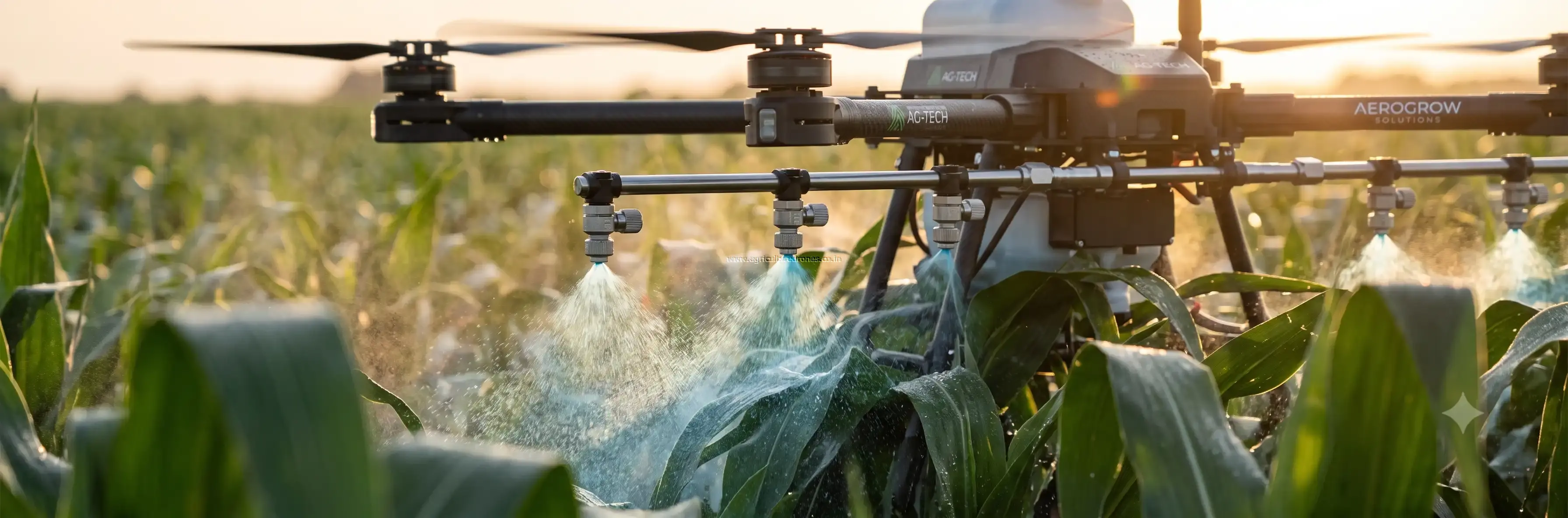
These drones carry and spray pesticides using strategically placed nozzles that atomize the liquid into fine droplets. The downward airflow generated by the drone's propellers—known as the downdraft—helps push these droplets deep into the crop canopy, ensuring thorough coverage on both the top and underside of the leaves. This results in highly effective crop protection and better overall crop health.

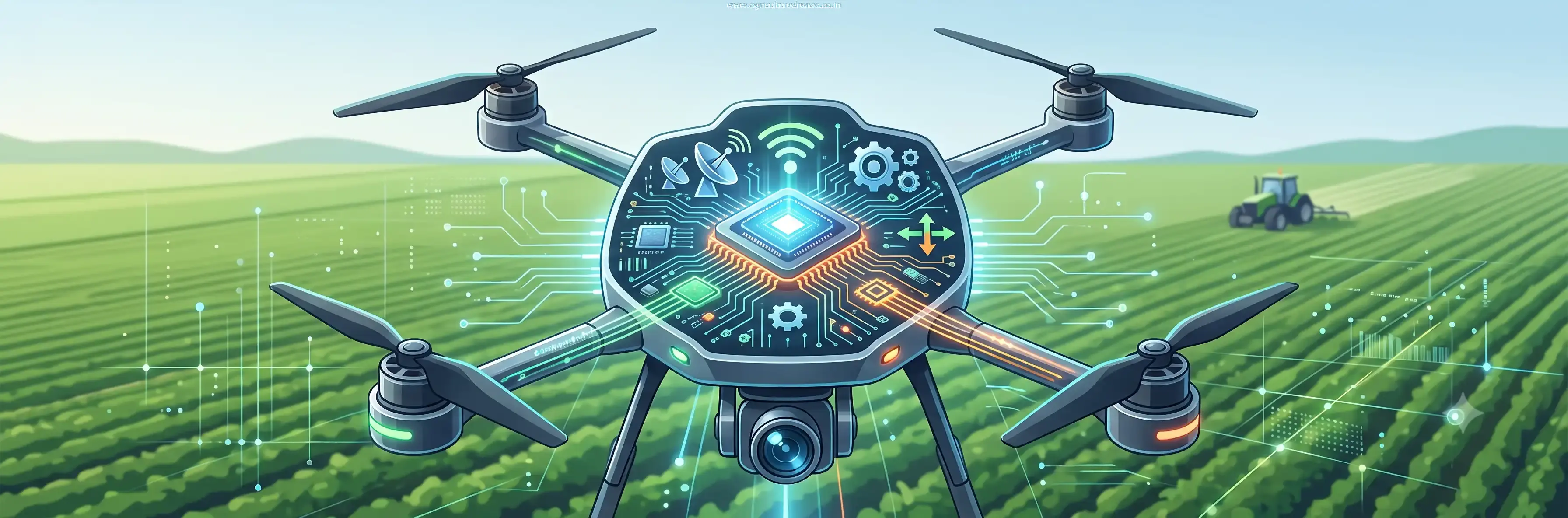
GPS and flight-control technology are the brains behind an agricultural drone. These systems allow the drone to maintain a steady altitude, follow exact pre-programmed flight paths, and adjust its speed automatically. For farmers, this means they can cover crop fields efficiently without overlapping sprays or missing patches.

GPS-enabled flight-control technology system
Agriculture Drones Precision Solutions

Drone spraying is quickly becoming an essential precision-agriculture solution. It allows for variable-rate application, meaning the drone can apply different amounts of pesticide to different areas of a field based on real-time data, ultimately leading to sustainable agriculture and reduced chemical wastage.

How Does Drone Pesticide Spraying Work?

The process of drone-based pesticide application is highly systematic and relies on a combination of advanced agricultural technology and careful planning. Here is a step-by-step breakdown of how drone pesticide spraying works in the field:

O

Crop field inspection: Before any spraying begins, the field is thoroughly inspected to identify the specific pest or disease problem, assess crop health, and determine the exact areas that require chemical application.

O

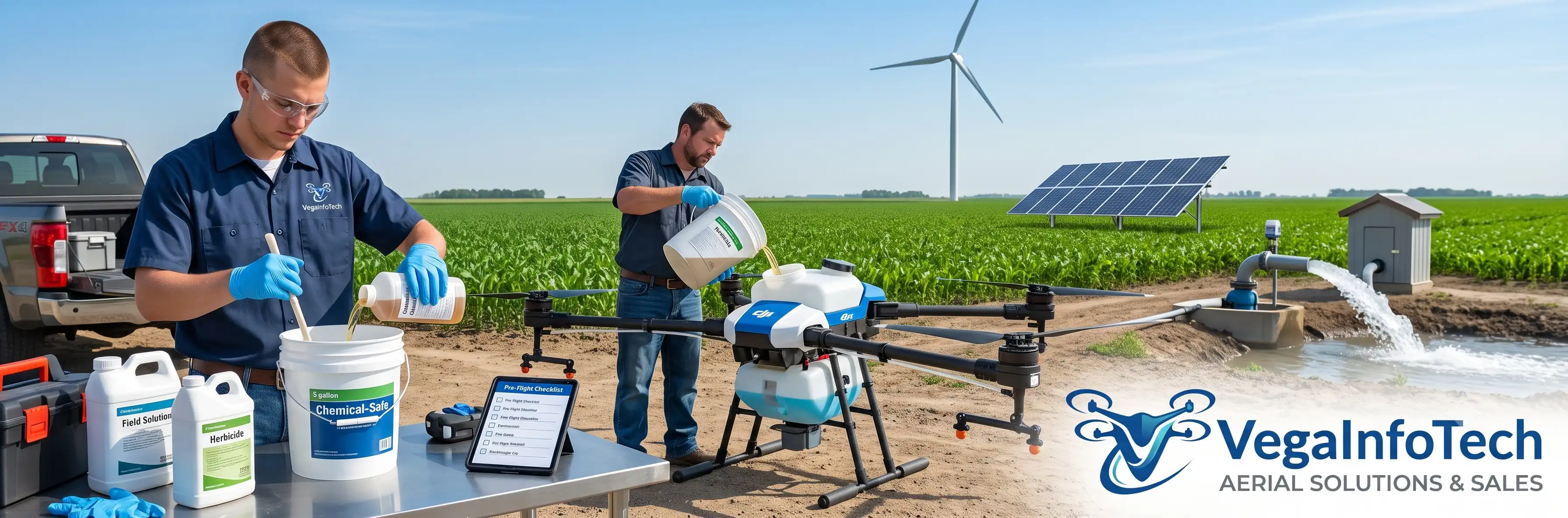
Preparing the pesticide solution: The pesticide solution is carefully mixed according to the approved product label. It is crucial to follow exact dilution rates to ensure effectiveness and environmental safety.

O

Filling the drone tank: The prepared chemical solution is poured into the agriculture drone’s onboard tank, ensuring secure seals to prevent any leaks during flight.

O

Planning the flight path: Using advanced software, the operator maps the boundaries of the crop field. The GPS-enabled drone uses this map to calculate the most efficient grid pattern for automated spraying.

O

Setting the spraying parameters: The operator configures flight height, speed, droplet size, and the flow rate of the pesticide to match the specific crop and weather conditions.

O

Automated drone flight: Once launched, the agricultural drone flies autonomously along the pre-programmed path. The advanced flight control system maintains a consistent altitude, even over uneven terrain.

O

Controlled pesticide spraying: The drone activates its pumps, spraying pesticides evenly across the crops. The propeller downdraft ensures the chemical application penetrates deep into the foliage.

O

Monitoring the treated crop field: After the flight, the farmer and operator can review the flight data to confirm total field coverage and monitor the treated area for pest reduction.

Benefits of Agriculture Drone Spraying

The transition from manual farm spraying to drone technology brings numerous advantages to modern agriculture. By integrating an agriculture drone for precision farming into daily operations, farmers can unlock the following key benefits:

O

Faster crop spraying: An agricultural spraying drone can cover large areas of farmland in a fraction of the time it takes manual laborers, significantly boosting farm productivity.

O

Reduced manual labour: Drone technology minimizes the reliance on manual labor for the physically demanding and time-consuming task of walking through fields with heavy backpack sprayers.

O

Improved spraying consistency: Automated flight paths and precisely calibrated nozzles ensure that every inch of the field receives a uniform application of pesticide.

O

Precision application: GPS-enabled drones allow for highly accurate spraying, ensuring chemicals are applied only where necessary, reducing chemical wastage.

O

Reduced crop damage from field traffic: Unlike tractors, drones fly above the crops, completely eliminating soil compaction and the physical destruction of plants caused by heavy machinery wheels.

O

Better access to difficult terrain: Drones easily navigate steep hills, muddy fields, and uneven landscapes that are difficult or dangerous for traditional ground equipment to access.

O

Efficient water usage: Agriculture drones use ultra-low volume (ULV) spraying techniques, which require significantly less water to dilute the pesticides compared to traditional methods.

O

Reduced operator exposure: When properly operated from a safe distance, drone spraying keeps farmers and workers away from direct contact with harmful agricultural chemicals.

O

Improved farm-management efficiency: Flight data and digital mapping provide farmers with actionable insights, making farm management more predictable and data-driven.

O

Support for precision farming: Drones integrate seamlessly into the broader ecosystem of smart farming technology, working alongside sensors and farm management software.

Why Choose Vega Info Tech Agriculture Drones?

Vega Info Tech is a trusted provider of comprehensive agriculture drone solutions designed specifically for the modern farmer. We understand that agricultural technology is only as good as the results it delivers in the field. That is why we combine robust drone hardware with intelligent software, sensors, and precision-agriculture solutions to create a seamless user experience.

Comprehensive Agriculture Drone Solutions in India
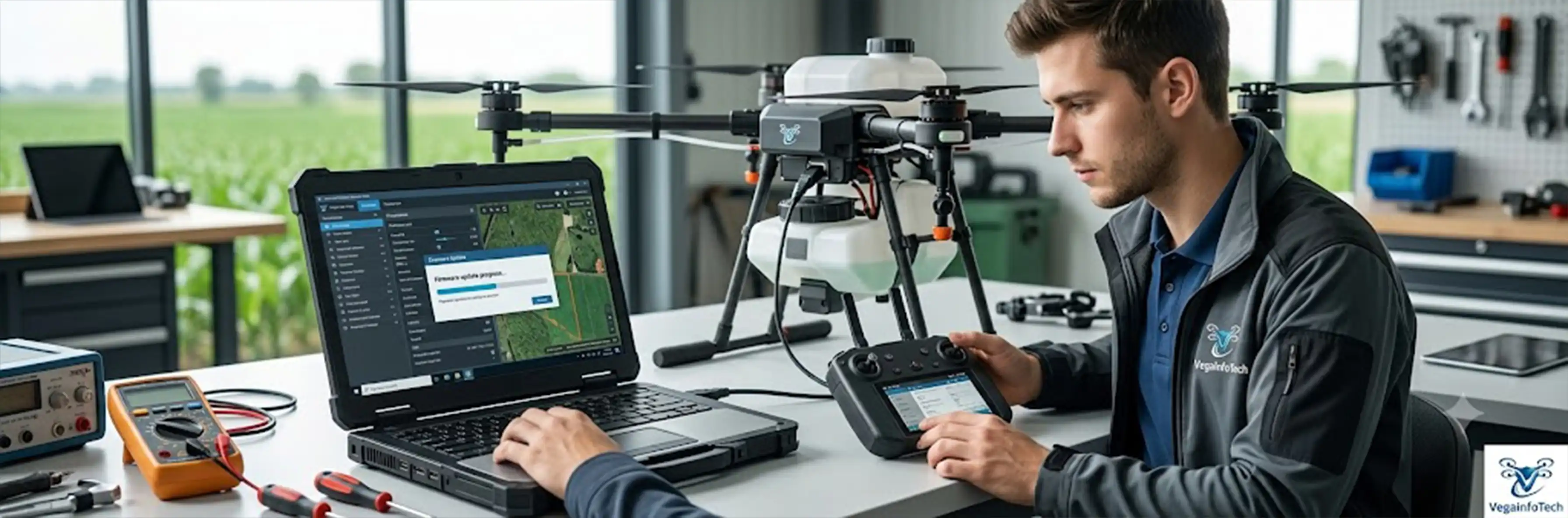
Vega Info Tech Employee Installs and Upgrades Software Programs In the LAB

Our drone spraying technology features precision flight control systems that ensure safe, stable, and accurate operations over any crop type. By utilizing advanced software and GPS-based navigation, a Vega Info Tech farming drone can map fields with pinpoint accuracy and execute automated flights flawlessly. We focus on delivering smart agricultural applications that genuinely improve farm productivity and crop protection.

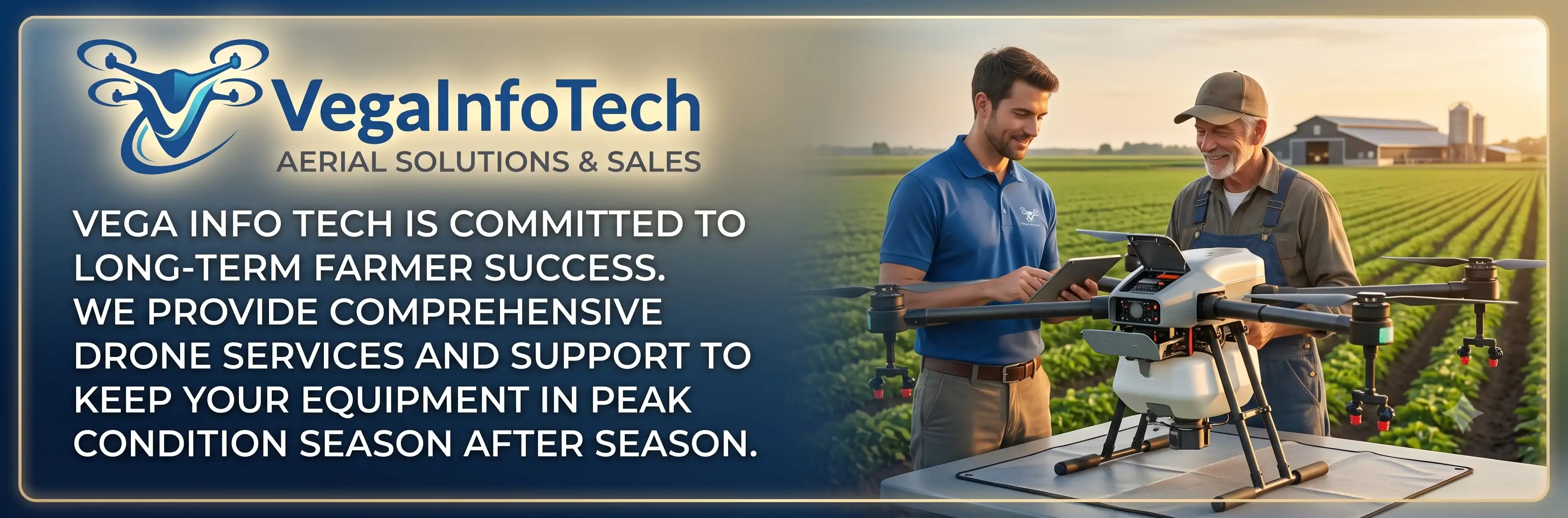
Beyond the hardware, Vega Info Tech is committed to long-term farmer success. We provide comprehensive drone service and support to ensure your equipment remains in peak condition season after season. Should you need replacements, we stock a full range of high-quality agriculture drone spare parts. Furthermore, we offer professional drone flying training, ensuring that you or your staff have the knowledge and confidence to operate the equipment safely, legally, and effectively.

Vega Info Tech-Technical-Support In India

Agriculture Drone Spraying vs Traditional Crop Spraying

To understand the value of agricultural technology, it helps to compare modern drone spraying solutions with traditional manual or tractor-based methods.

Feature

Agriculture Drone Spraying

Traditional Spraying

Field mobility

Flies easily over mud, hills, and tall crops.

Limited by muddy ground, steep slopes, and crop height.

Labour requirement

Requires only one trained operator and an assistant.

High dependency on multiple manual laborers.

Crop access

Propeller downdraft pushes spray deep into the canopy.

Spray mostly rests on the top surface of the leaves.

Application control

High precision via GPS and automated flow rates.

Highly variable; depends on the manual operator's speed.

Field traffic

Zero soil compaction; no physical damage to plants.

Heavy tractors compress soil and crush crop rows.

Operational efficiency

High speed; covers large acreages rapidly.

Slow and physically exhausting for workers.

Suitable Crops for Drone Pesticide Spraying

Agricultural drones are highly versatile and can be adapted to treat a wide variety of crops. In the Indian agricultural market and beyond, drone spraying solutions for farmers are proving highly effective for:

O

Rice: Drones easily spray flooded paddy fields where traditional tractors cannot operate.

O

Cotton: The powerful downdraft penetrates the dense canopy of mature cotton plants.

O

Chilli: Precision application helps protect delicate chilli plants from targeted pests.

O

Maize: Drones can easily fly over tall maize stalks that are impossible to spray manually late in the season.

O

Soybean: Ensures rapid coverage during critical growth stages to prevent widespread disease.

O

Pulses: Provides gentle, even coverage to protect fragile pulse crops.

O

Vegetables: Ideal for high-value vegetable crops requiring careful and frequent crop protection.

O

Other suitable field crops: Including sugarcane, wheat, and commercial orchards.

Best Practices for Pesticide Spraying with Agriculture Drones

While drone technology is highly advanced, operator responsibility remains the most critical factor in successful crop protection. Adhering to best practices ensures both safety and high farm productivity.

Mixing The Chemicals Accurately

First and foremost, always follow pesticide labels. The label is the law; ensure you are using the correct dosage and mixing the chemicals accurately. When setting up the agriculture spraying drone, input the appropriate spray settings, paying close attention to droplet size and flight height to match the crop type and the specific pest you are targeting.

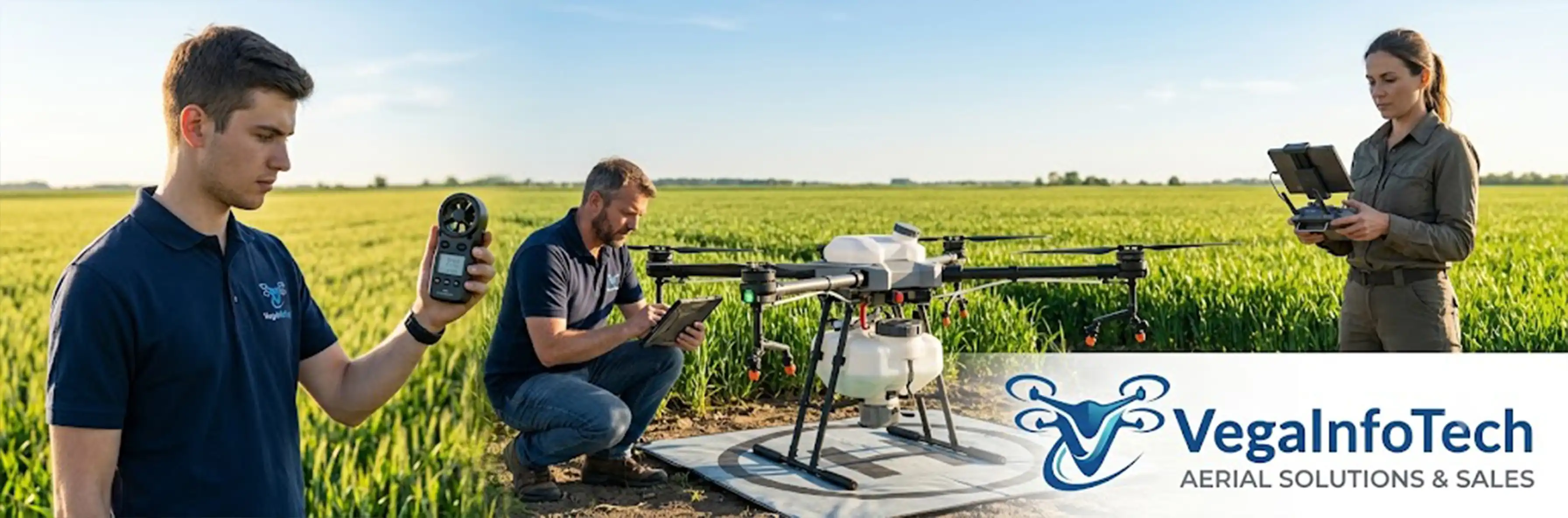
Weather conditions play a massive role in drone-based pesticide application. Operators must constantly monitor wind speed to prevent spray drift—the unintended spread of chemicals to neighboring fields or water sources. Spraying should be avoided during high winds or extreme heat. Establishing buffer zones around the field boundaries is a crucial step in preventing off-target contamination.

Employees are monitoring the Airflow & Drone Settings before flying
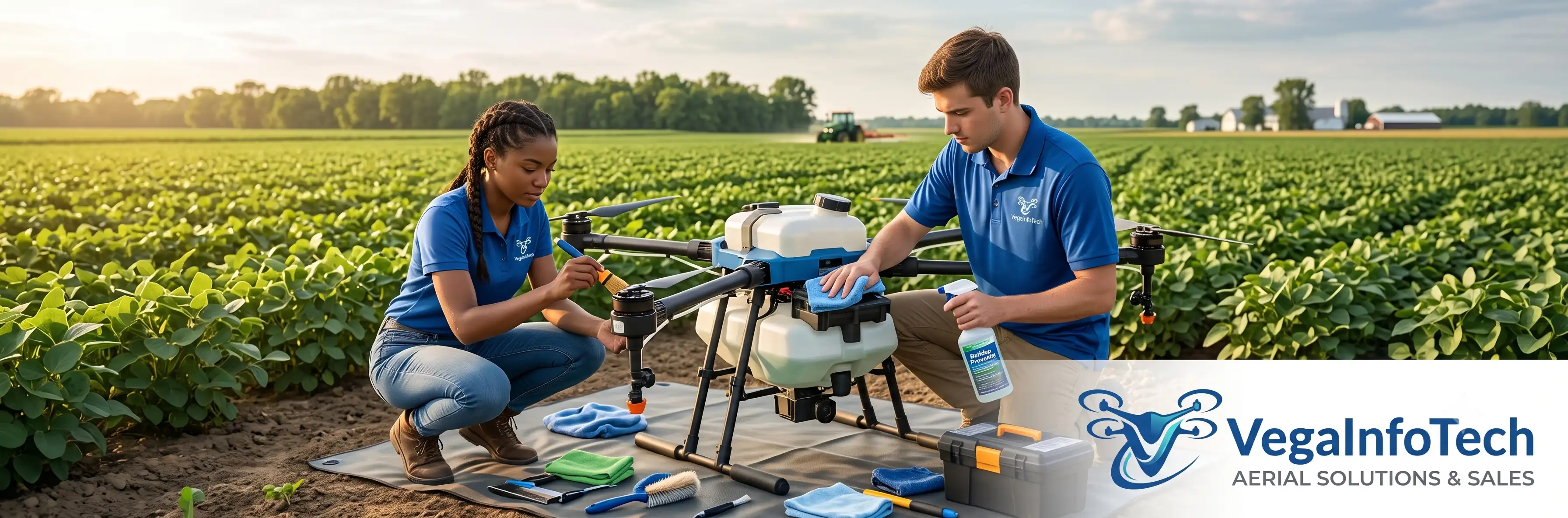
Cleaning The Drone

Maintenance and safety are equally important. Always wear appropriate personal protective equipment (PPE) when handling chemicals or loading the drone. After completing the job, thoroughly cleaning and maintaining the drone will prevent chemical buildup and prolong the life of the equipment. Finally, ensure that all flights are conducted by individuals who have received proper operator training to maintain safe and effective operations.

Agriculture Drone Spraying Services by Vega Info Tech

Whether you are looking to purchase equipment or hire experts to treat your fields, Vega Info Tech offers a complete ecosystem of agricultural technology services to meet your needs. We provide direct agriculture drone sales, offering the best agriculture drone for pesticide spraying tailored to your specific farm size and crop type.

For farmers who prefer a hands-off approach, we provide professional agriculture drone spraying services. Our trained operators will visit your farm, map your fields, and execute precision pesticide application safely and efficiently.

To support our technology, we offer dedicated drone maintenance and support, supply genuine agriculture drone spare parts, and engage in custom drone software development to meet unique smart farming needs. If you want to bring the operation in-house, our comprehensive drone flying training will equip your team with the skills required for success.

Contact Vega Info Tech today to learn more about our agriculture drone spraying solutions and discover how we can help you modernize your farm.

Frequently Asked Questions

What is an agriculture drone spraying pesticide?
It is an unmanned aerial vehicle (UAV) equipped with a chemical tank, pumps, and spray nozzles. It uses GPS and automated flight controls to accurately spray liquid pesticides, herbicides, or fertilizers over agricultural fields.
How does a pesticide spraying drone work?
The drone flies a pre-programmed route over a mapped field. As it flies, it pumps liquid chemical from its tank through nozzles, creating a fine mist. The downward wind from the propellers pushes this mist deep into the crop foliage.
What crops can be sprayed using agricultural drones?
Drones are highly versatile and can spray almost any field crop, including rice, cotton, maize, sugarcane, chilli, soybean, and various vegetables. They are especially useful for tall crops and flooded fields.
Is drone pesticide spraying suitable for Indian farms?
Yes, agricultural drone spraying in India is highly suitable. It helps overcome local farming challenges such as labor shortages, difficult terrain, water scarcity, and the need for rapid pest control during monsoon seasons.
What are the benefits of crop spraying drones?
Key benefits include faster field coverage, reduced chemical wastage, zero soil compaction, lower water usage, and reduced exposure of farmworkers to harmful pesticides.
How much area can an agriculture spraying drone cover?
Coverage depends on the drone's tank capacity, battery life, and flight speed. On average, a standard agricultural drone can cover anywhere from 2 to 5 acres in a single flight (approximately 10 to 15 minutes).
How can farmers choose the right agriculture spraying drone?
Farmers should consider the size of their fields, the types of crops they grow, the drone's tank capacity (e.g., 10L vs. 30L), battery life, and the availability of local service and spare parts from providers like Vega Info Tech
Does drone spraying require trained operators?
Yes. Operating a pesticide spraying drone requires specific training in both drone flight controls and safe agricultural chemical handling to ensure effective application and regulatory compliance.